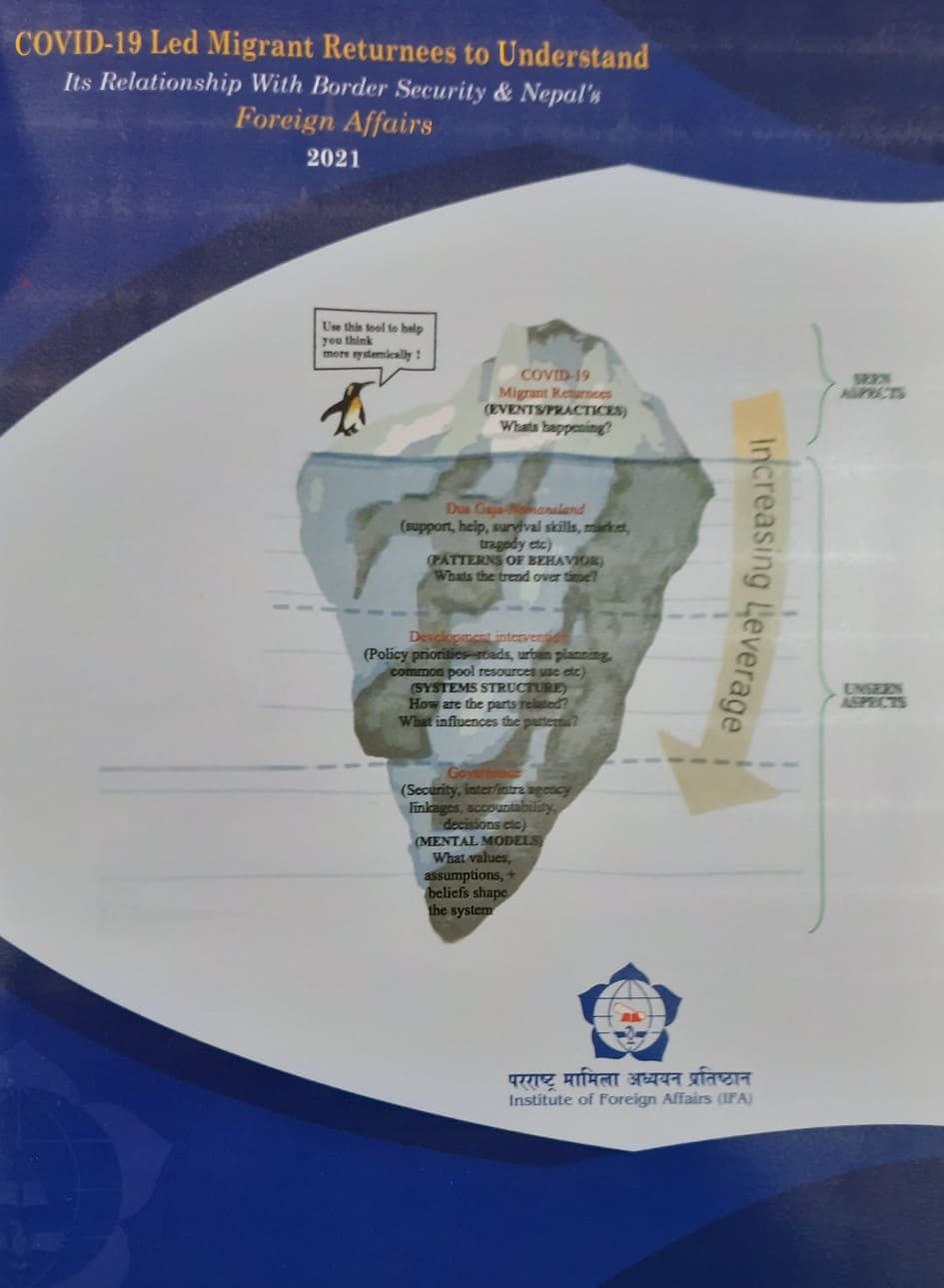
This study examines COVID-19-driven migrant return in Nepal’s Province No. 2, focusing on its socio-economic, health, and security implications. Drawing on Grounded Theory and the Iceberg Model, it analyzes the lived experiences of returnees, local communities, and frontline agencies in border regions. The findings reveal structural challenges such as weak governance, inadequate infrastructure, and strained border management, alongside emerging opportunities linked to migrants’ skills and knowledge. The study highlights the need for integrated policy responses to improve governance, strengthen resilience, and utilize migrant resources for sustainable development and national security.